
Updated: July 27, 2026
An official taxi or remis from Ezeiza (EZE) to central Buenos Aires costs about USD 30–40 and takes 45 to 60 minutes, booked at a staffed counter inside the arrivals hall for a fixed price with tolls included. This page explains how the counter system works, the difference between a taxi and a remis, what you actually pay, and how to avoid the one mistake that costs arriving travellers the most. As of 2026 the official operators and the booking process below are running normally.
How do I book an official taxi at Ezeiza?
You book at a desk, not at the kerb. After you clear customs and walk into the public arrivals hall at Terminal A, look for the signed counters of the authorised operators, tell the clerk your destination, pay a fixed fare, and receive a voucher and an assigned driver. There is no meter to watch and no fare to negotiate in the car. The whole point of the system is that the price is agreed before you move, so you cannot be taken on a longer route or charged a surprise total at the end.
What is the difference between a taxi and a remis?
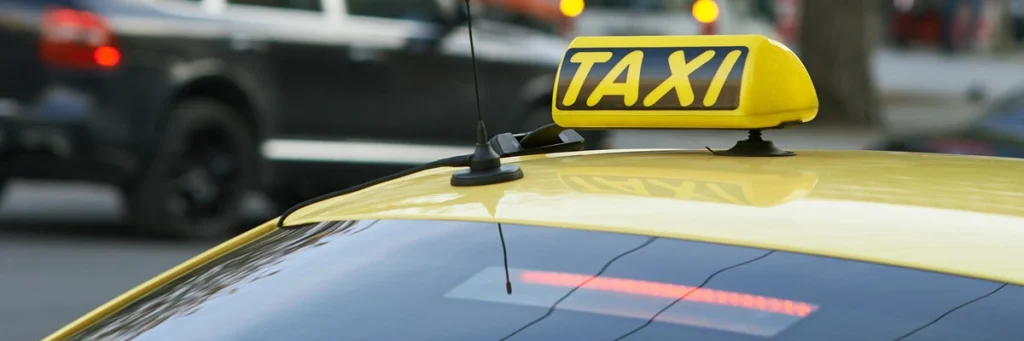
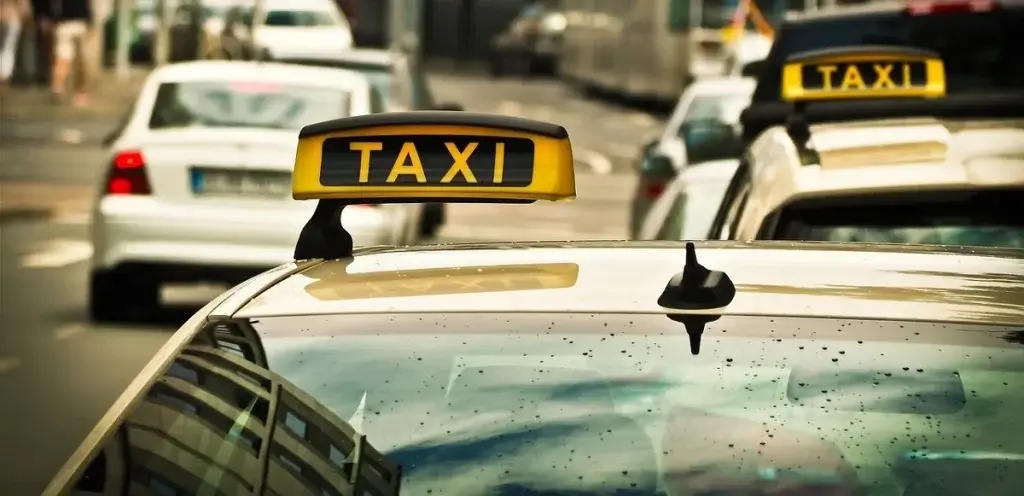
Both are legitimate at Ezeiza and both are booked the same way at a counter. A city taxi is the metered black-and-yellow car you also see around Buenos Aires, but from the airport it runs on a fixed agreed fare. A remis is a private hire car ordered through an office, unmarked and often slightly more comfortable, again at a set price quoted up front. For an airport run the practical difference is small: both are safe when booked at an official desk, and both cost roughly the same USD 30–40 to central districts.
How much does an airport taxi cost?
Reckon on USD 30–40 to central neighbourhoods such as Recoleta, Palermo and San Telmo, with tolls already included in the counter price. Fares drift with the peso and with your exact destination, so treat the figure as a guide and confirm the total at the desk before you pay. A few points worth knowing:
- The quoted fare is for the whole car, not per person, so it splits well between two to four travellers.
- Motorway tolls between the airport and the city are built into the counter price.
- Tipping is not expected; rounding up for help with heavy bags is a kind gesture, not an obligation.
- You can usually pay by card at the counter, but carry some pesos as a fallback.
Where do I find the taxi counters?
The counters are inside the Terminal A arrivals hall, past customs, clearly signed and staffed. Ignore anyone who approaches you before you reach them, however official their badge or lanyard looks; the genuine service never touts for passengers in the hall or on the walk from baggage claim. If you land at Terminal C on a domestic flight the principle is the same, though most airport-taxi demand is at the international terminal. Sort your ride here rather than in the crush outside the doors.
Is it safe to take a taxi from EZE?
Yes, provided you book at an official counter. The recurring problem at Ezeiza is not the licensed taxis but the unofficial drivers who intercept new arrivals with an offer of a ride, then charge several times the going rate or run a card-machine trick. The defence is simple: only ever arrange your car at a staffed desk, and decline every kerbside offer. Our taxi scams page walks through the specific tricks to recognise, and it is worth a two-minute read before you land.
Taxi, transfer or shuttle — which should I pick?
A counter taxi is the best all-round default: no advance planning, a fixed price, and a door-to-door ride. If you would rather have a driver waiting with your name on a sign, especially for a late-night landing or a family with luggage, a pre-booked private transfer locks the price in before you fly. If you are travelling light and want to save money, the Tienda León shuttle costs roughly a third as much to a downtown hub. Our full airport-to-city guide compares every option side by side.
Can I take an airport taxi at night?
Yes. The official counters operate to meet the arriving flights, including the late bank of long-haul services, and a booked taxi is one of the safest ways into the city after dark because the fare and driver are fixed before you leave the terminal. If you are arriving very late and want zero uncertainty, a pre-booked transfer that meets you at the exit is the calmest option, since a driver is already waiting when you come out and you skip the counter queue.
How do I pay, and do I need cash?
Most official counters take cards, and paying the fixed fare by card at the desk is fine. Even so, arriving with some Argentine pesos smooths the first hour, for a tip, a top-up, or a driver whose card reader is down. Because Argentina's currency situation shifts, it is worth reading our how to pay in Argentina guide before you travel so you know whether to bring US dollars to change, use a card, or draw pesos from an ATM on arrival. A little cash in hand means the ride into the city is one less thing to think about while you are still finding your feet.



 English (UK)
 Français
 Deutsch
 Русский
 Українська
 Türkçe
 Polski
 Español
 Italiano
 العربية
 中文
中文 Ελληνικά
 日本語
日本語 한국어
한국어 Čeština
 Português